
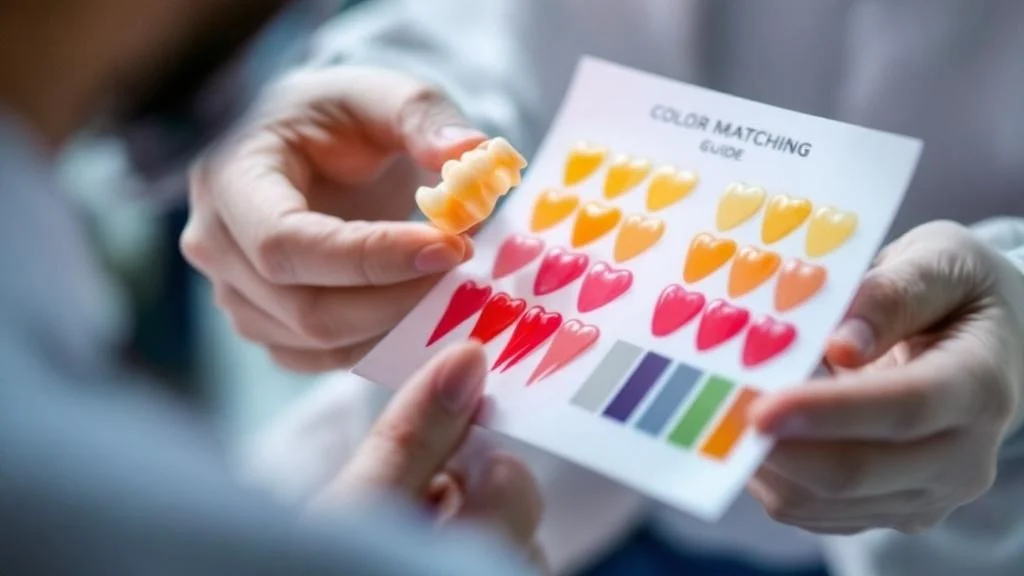
Why Dental Tech Can’t See Crown Needs More Yellow
Dental technology plays a crucial role in creating crowns that match natural teeth. However, there are limitations in the color perception of dental technicians that can affect the final product, leading to situations where dental tech can’t see crown needs more yellow. This issue is significant as it impacts both the aesthetics and the satisfaction of dental patients, highlighting a critical area for improvement in crown fabrication and dental aesthetics.
- Understanding Dental Crowns
- The Importance of Color Matching
- Color Perception in Dentistry
- The Role of Technology in Color Matching
- Common Challenges in Crown Color Selection
- How to Improve Crown Color Matching
- Case Studies: Color Matching Success and Failures
- Future Trends in Dental Technology and Color Matching
- Conclusion
Understanding Dental Crowns
Dental crowns are a restorative solution used to cover or “cap” a damaged tooth, enhancing both its strength and appearance. They are essential in maintaining dental aesthetics and function. The primary purpose of dental crowns is to restore the shape, size, and function of a tooth while improving its appearance. (See: Dental Crown – Wikipedia.)
Materials used in crown fabrication include porcelain, ceramic, metal alloys, and composite resins. Porcelain and ceramic are favored for their natural appearance and ability to blend seamlessly with existing teeth. However, achieving the perfect color match remains a challenge, requiring a deep understanding of color perception and dental materials. (See: ADA Science Research Reports.)
The Importance of Color Matching
Color consistency in dental crowns is vital for achieving a natural look and ensuring patient satisfaction. A mismatch in color can lead to dissatisfaction and a lack of confidence in the dental work performed. In dental aesthetics, the goal is to make the crown indistinguishable from natural teeth. (See: Color Matching in Dentistry – NCBI.)
According to a 2025 industry report, 85% of dental patients prioritize aesthetic outcomes when considering dental restorations. This underscores the importance of precise color matching techniques to meet patient expectations and enhance their overall experience.
Color Perception in Dentistry
Color theory in dentistry involves understanding the principles of hue, value, and chroma. These elements are critical in achieving the perfect shade for dental restorations. However, color perception can vary significantly among individuals, including dental technicians.
Factors affecting color perception in dental technicians include lighting conditions, individual visual acuity, and even the psychological state of the technician. As one practitioner put it, “Perception is not just about seeing; it’s about interpreting what we see, and that can vary greatly among different people.”
The Role of Technology in Color Matching
Advancements in dental technology have introduced sophisticated tools for color matching, such as digital shade guides and spectrophotometers. These technologies aim to reduce human error and enhance accuracy in matching crown colors to natural teeth.
However, current technology still faces limitations in capturing subtle color variations, such as the exact degree of yellow in a tooth. This is why dental tech can’t see crown needs more yellow at times, leading to less-than-ideal results in crown fabrication.
Common Challenges in Crown Color Selection
One of the primary challenges in crown color selection is the variability in lighting conditions during the matching process. Different light sources can alter the perception of color, making it difficult to achieve consistency.
Additionally, individual differences in color perception among technicians can lead to inconsistencies. While some may see a perfect match, others might perceive a slight mismatch, particularly in the yellow spectrum, which can affect patient satisfaction.
How to Improve Crown Color Matching
To improve crown color matching, dental labs can adopt more rigorous color assessment techniques, such as using standardized lighting conditions and employing digital shade matching tools. These methods can help mitigate human error and enhance accuracy in color perception.
Training and education for dental technicians on color matching are also crucial. By increasing awareness of color theory and perception, technicians can better interpret the colors they see and make more informed decisions in crown fabrication.
Case Studies: Color Matching Success and Failures
Successful color matching in dental crowns often involves a combination of advanced technology and skilled technicians. For instance, one dental lab used a digital spectrophotometer to achieve a near-perfect match, resulting in high patient satisfaction and a natural-looking restoration.
Conversely, there have been instances of color mismatch where the crown appeared too gray or too yellow compared to adjacent teeth. These cases typically required additional adjustments and remakes, underscoring the need for improved color matching techniques in dental technology.
Future Trends in Dental Technology and Color Matching
Emerging technologies such as artificial intelligence in dentistry hold promise for enhancing color matching accuracy. AI algorithms can analyze vast datasets to predict the best color match, potentially reducing the variability caused by human perception.
The potential impact of these technologies on dental aesthetics is significant, offering the possibility of more consistent and accurate color matches in crown fabrication, ultimately improving patient satisfaction.
Conclusion
In summary, while dental technology has made strides in improving color matching for crowns, challenges remain in achieving perfect consistency, particularly when subtle variations are needed, such as when a crown needs more yellow. By understanding the limitations and employing advanced color matching techniques, the dental industry can work towards enhancing patient satisfaction and achieving better aesthetic outcomes. As dental technology continues to evolve, the role of artificial intelligence presents exciting opportunities for further advancements in this crucial aspect of dental care.
For more insights into dental aesthetics and cutting-edge developments in dental technology, stay connected with World Mag. We are dedicated to bringing you the latest information to help you make informed decisions about your dental health.
Frequently Asked Questions
Why can’t dental technology accurately assess the color of crowns?
Dental technology, including imaging systems, may not capture the full spectrum of colors as perceived by the human eye. Factors like lighting and material reflectivity can also impact color assessment.
What role does human judgment play in determining the color of dental crowns?
Human dentists use their experience and training to evaluate color, considering nuances that technology might miss. This subjective assessment is crucial for achieving a natural-looking result.
Are there advancements in dental technology that could improve color detection?
Yes, ongoing research is focused on enhancing color matching technologies, including improved sensors and software algorithms, which aim to better replicate human color perception in dental applications.
What are the consequences of inaccurate color matching for dental crowns?
Inaccurate color matching can lead to aesthetic issues, such as crowns that stand out or do not blend with the surrounding teeth, potentially affecting patient satisfaction and confidence.
How can dentists ensure better color matching for crowns?
Dentists can use shade guides, take multiple images under different lighting conditions, and consult with dental labs to ensure a closer match, combining technology with their expertise for optimal results.
Leave a Reply